Google Chrome download page rendering issue

In September 2008, Google launched Chrome. The browser was positioned as a clean-room reimagining of web browsing—faster, simpler, more stable. Google had put serious engineering behind it. The announcement was a big deal.
The download page, however, had a problem.
In Firefox 2.0, the dropdown menu on google.com/chrome rendered broken. The layout was off, the element misplaced—visually wrong in a way that was hard to miss. In Internet Explorer 7, the same page rendered correctly. The irony was difficult to overlook: Google, the company championing open web standards and about to launch a browser designed to do better than IE, had shipped a download page that worked in IE and broke in Firefox.
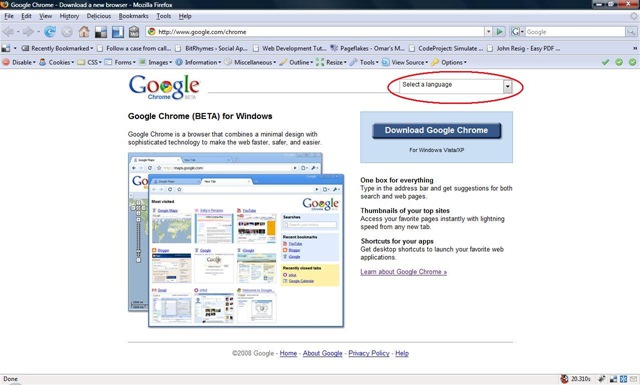
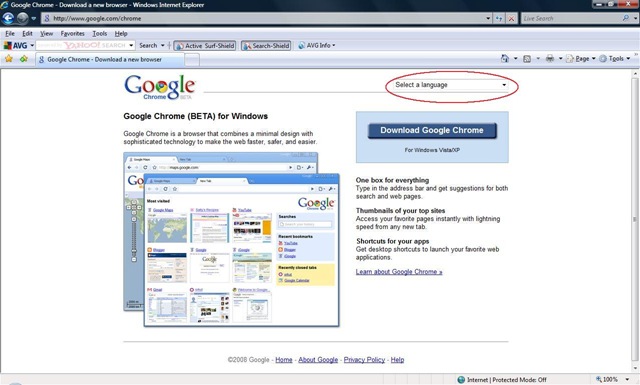
The most charitable explanation is timeline pressure. Chrome’s launch had been a tightly kept secret, coordinated around a specific date. The download page was likely one of many moving parts being finalized simultaneously. A Firefox rendering regression on a dropdown, caught late or not at all, is exactly the kind of thing that slips through when teams are sprinting toward a deadline.
That’s not an excuse—it’s a familiar pattern. QA coverage tends to concentrate on the browsers with the largest internal usage. In a company like Google in 2008, IE was likely heavily tested because it dominated market share. Firefox testing may have been less systematic. Chrome itself wasn’t available yet to test against, which created an interesting gap: the team building a new browser didn’t yet have their own browser to test with.
There’s also a more uncomfortable possibility: nobody noticed because nobody looked. The page was probably built, reviewed, and approved primarily in the browsers people had at hand. Cross-browser testing was—and often still is—the kind of task that gets done when time allows rather than as a gate on shipping.
The bug was minor. It got fixed. A commenter at the time said there were more important things to worry about with Chrome. They weren’t wrong. But small failures at visible moments are disproportionately instructive precisely because of their visibility. When the thing you’re announcing is a better browser, and the page announcing it breaks in an existing browser, the gap between message and reality is obvious.
Even the best engineering teams ship things that break. What matters is whether the process catches it—and whether that process is honest about its own gaps.